Live Dealer Blackjack in New Zealand: Rules and Play
 Available in US
See how live-dealer rounds work and what to consider when choosing a game, managing a budget and reviewing bonus conditions.

Table of Contents
- How Live-Dealer Blackjack Works
- Rules, Payouts and Insurance Bets
- Assessing Live Blackjack Sites and Table Conditions
- Choosing an Online Live Blackjack Game
- Real-Money Play and New Zealand’s Regulatory Transition
- Playing Live Blackjack Within a Budget
- Card Counting and Its Limits Online
- Free Play, Bonuses and Wagering Conditions
- Live Blackjack Variants and Bonus Terms
- What Playing Against a Live Dealer Means
How Live-Dealer Blackjack Works
Blackjack is a contest between each player and the dealer, rather than a competition among players at the table. The aim is to finish with a hand closer to 21 than the dealer’s, without going over that total. A live-dealer game keeps this familiar objective but presents the cards through a real-time video stream, with a human dealer handling an actual deck. The result is a format that resembles a casino table while being played online.
A round follows a shared sequence. Bets are placed before the cards are dealt, then the player’s hand and the dealer’s visible card form the basis for decisions. The player can choose how to proceed, while the dealer completes the round according to the table’s rules. The outcome depends on the cards and the actions taken during the hand. The underlying contest remains blackjack, even though the physical dealing and video presentation make the experience different from a game run entirely by software.
The live element is not simply a visual effect added to a digital card game. In live-dealer blackjack, cards are physically handled at a table and captured by cameras for remote players to see. The dealer carries out the dealing process, while the online interface lets players participate in the round. This combination of physical cards and digital access is what distinguishes a live casino blackjack game from a computer-generated version.
Choosing a live dealer blackjack site in New Zealand means finding an operator whose available details are worth checking before you play. This list gives a brief, fact-based reference for considering your options.
License: Malta Gaming Authority, licence no. MGA/B2C/394/2017 N1 Casino is listed with a Malta Gaming Authority licence, number MGA/B2C/394/2017.
License: Tobique Gaming Commission, licence no. 0000002 Ricky Casino is listed with a Tobique Gaming Commission licence, number 0000002.
Payout speed: 1-3 business days Wintino’s stated payout speed is 1–3 business days.
License: Malta Gaming Authority, licence no. MGA/B2C/370/2017 Play Grand is listed with a Malta Gaming Authority licence, number MGA/B2C/370/2017.
License: Tobique Gaming Commission, licence no. 0000091 7Bit Casino is listed with a Tobique Gaming Commission licence, number 0000091.
License: Curaçao Gaming Authority, licence no. OGL/2024/165/0185 BitStarz is listed with a Curaçao Gaming Authority licence, number OGL/2024/165/0185.
License: 07017519840 · Payout speed: 1-3 business days Zotabet lists licence number 07017519840 and a payout speed of 1–3 business days.
License: Tobique Gaming Commission, licence no. 0000064 Neospin is listed with a Tobique Gaming Commission licence, number 0000064.
Payout speed: 1-3 business days Lamabet’s stated payout speed is 1–3 business days.
The stream also shapes the pace. In a live game, dealing and decisions unfold in view of the player, so the round takes time to progress. Video transmission can introduce delays, and the game may require higher bets than some alternatives. These conditions do not change the aim of blackjack, but they affect how the game is experienced online. A pause may reflect the live sequence or a streaming delay rather than a change in the rules.
By contrast, online RNG blackjack uses software to shuffle and produce the cards. Because the dealing sequence is generated digitally, rounds can move faster than at a live table. There is no physical dealer whose actions need to be shown through a stream. The interface presents the game state and accepts player decisions, but the card sequence is software-based rather than dealt from an actual deck on camera.
The difference is therefore both procedural and experiential. RNG blackjack prioritises a quicker digital round; live blackjack makes the dealing process visible and places a human dealer at the centre of the presentation. Neither format changes the basic objective: each player still plays against the dealer and seeks a total nearer to 21 without exceeding it. The distinction lies in how the cards are produced and how the round is delivered.
For a person comparing live dealer blackjack online with software-shuffled play, the word “live” refers to the real-time presentation of a physical table, not to a different kind of contest. The online connection carries the dealer’s actions to players, while the interface provides a way to take part. As a consequence, live play is tied to the pace of the stream and the dealing process. It is not designed to move through hands as quickly as an RNG game can.
The format can be understood as a bridge between a casino table and online access. The cards are real, but participation takes place through a screen; the dealer is physically present, but players are not seated around the same table. That distinction matters when describing what an online live-dealer game offers. It reproduces the visible dealing of a casino setting, while retaining the delays and conditions associated with streaming.
For New Zealand players considering live dealer blackjack in 2026, the central distinction is straightforward: live tables use actual cards and a streamed dealer, whereas RNG games rely on software shuffles and allow faster play. The blackjack objective is shared across both formats. What changes is the route from dealing to decision: one is presented as a live table, and the other as a faster, software-managed game.
Rules, Payouts and Insurance Bets
Blackjack rules determine how a hand is valued and which decisions are available. Number cards count at face value, while jacks, queens and kings are each worth ten. An ace can count as either one or eleven, depending on which value keeps the hand from exceeding twenty-one. A hand containing an ace is therefore flexible until another card makes the higher value impossible.
Blackjack rules can vary between tables; for example, an ace can be valued as either one or eleven to keep the hand from exceeding twenty-one.
Players can hit to take another card or stand to keep the current total. Depending on the table rules, they may also double down, increasing the stake in return for taking a further card, or split a pair into separate hands. Some games permit surrender, which ends a hand under specified conditions. These options are not interchangeable: a decision that is available at one table may be absent at another, and the permitted actions can affect how a hand is played.
The dealer’s rules matter as well. The number of decks, whether the dealer hits or stands on a soft seventeen, and whether surrender is allowed can differ between games. A soft seventeen includes an ace counted as eleven; the dealer’s instruction on that hand affects how play proceeds. A specialist review describes these as variable table rules, rather than fixed features of every live blackjack game. The displayed rules should therefore be read as part of the game, not assumed from its title.
Payout terms also require attention. A natural blackjack is an ace and a ten-value card dealt as the opening hand. A specialist review reports that some tables pay 3:2 for a natural, while others pay 6:5. The difference changes the return on that winning hand, so the payout shown for the particular game is more informative than a general expectation. A natural and a hand that reaches twenty-one after additional cards should not be treated as the same result unless the table rules explicitly say so.
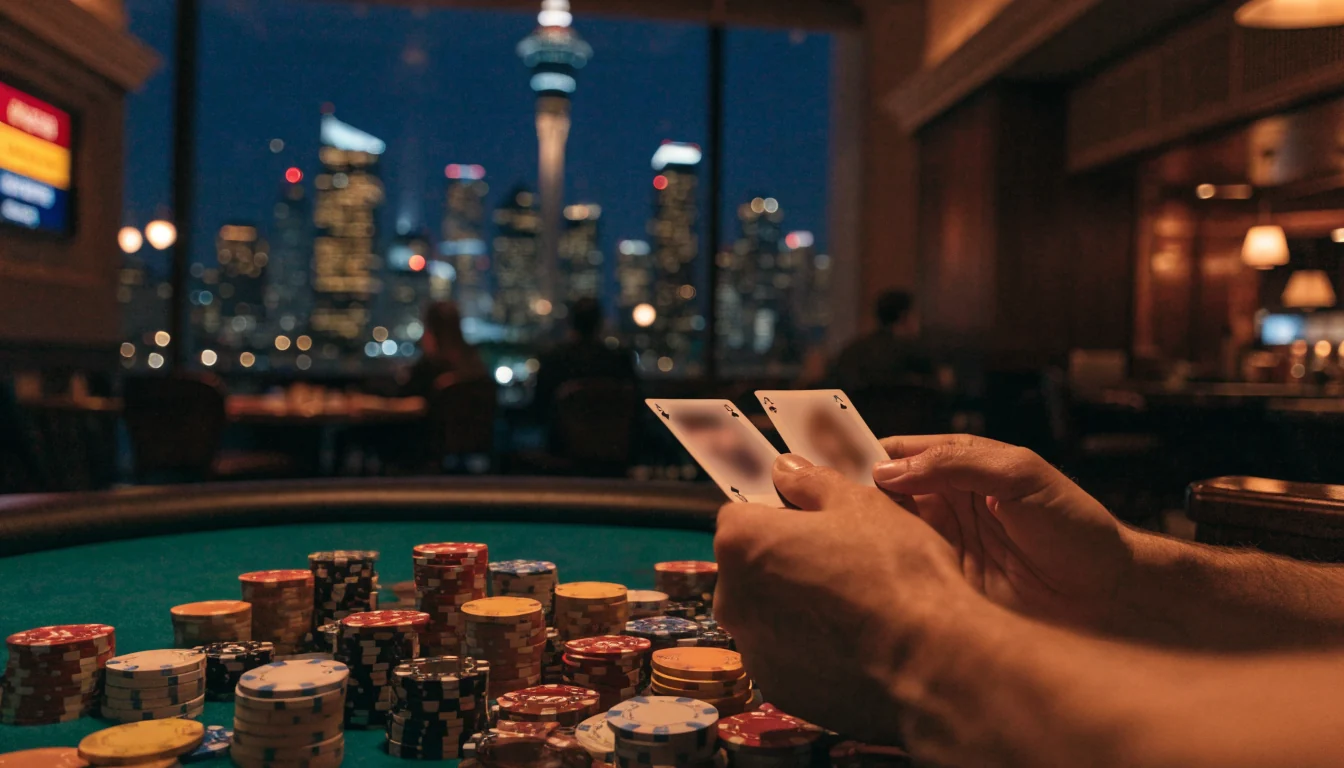
Insurance is a separate wager offered in connection with the dealer’s visible ace. It concerns whether the dealer has a natural blackjack; it does not improve the player’s own hand or alter its card values. If the dealer does not have blackjack, the insurance stake is lost, while the original hand continues under the ordinary rules. Because this wager is an additional risk rather than protection for the player’s hand, avoiding insurance is the more prudent choice for most players.
The dealer appears on screen, but the game’s decisions are made through the table controls: selecting a permitted action changes the player’s hand, not the dealer’s procedure. A live presentation does not itself establish that a dealer can hear players. Any communication depends on the particular interface and should not be assumed from the presence of a live blackjack dealer.
Assessing Live Blackjack Sites and Table Conditions
Comparing live blackjack sites is more useful when the focus is on the tables available than on broad claims that one site is the best. A table’s rules and practical conditions affect what the game involves, while promotional language alone does not establish whether a particular table suits a player’s preferences.
Start with the information displayed for each table. A specialist review reports that games can differ in deck count, whether the dealer hits or stands on soft 17, surrender availability and blackjack payouts. These details should be checked against the table’s own rules before play; a general description of a site may not apply to every game it offers. A natural blackjack payout, for instance, is worth comparing directly rather than assuming that all tables use the same terms.
The table interface should make those conditions easy to find. If rules are absent, unclear or difficult to match to the selected game, there is less basis for comparing the offering. A site can provide several live tables, but the number of options by itself says little about their suitability. The relevant question is whether the available tables disclose the conditions needed to make an informed comparison.

Practical access is another part of the assessment. Live blackjack uses actual cards, and the stream can introduce delays or the table can require higher bets. Those factors may affect whether a game is workable in a given setting. A low-stakes table should therefore be assessed by its stated betting conditions, rather than inferred from a “beginner-friendly” label or from the site’s general presentation.
Mobile access also needs to be considered at table level. A mobile live blackjack interface may display the stream, rules and betting controls differently from a desktop version. Checking whether these elements remain readable and usable on the device intended for play is more informative than relying on a claim that a site is mobile-friendly. A stream that is delayed can also make the pace less predictable, regardless of the device.
Promotions should be assessed separately from the game itself. A no-deposit bonus or other offer does not establish that a live blackjack table has favourable rules or low betting requirements. Before real-money play, the fine print and bonus conditions on trustworthy sites and casinos should be checked. Conditions can specify how blackjack contributes to wagering requirements and may impose maximum-bet rules while wagering is in progress. The offer’s headline description is not a substitute for those terms.
A practical comparison can therefore record, for each table, the disclosed rules, payout, betting conditions, stream performance and mobile usability. It should also distinguish information about a specific table from claims made about a whole site. This makes it possible to compare live dealer blackjack sites without treating a ranking, bonus label or polished interface as evidence of table quality. No single label identifies the best live dealer blackjack site for every player; the assessment depends on the conditions that are visible and relevant to the game being considered.
Choosing an Online Live Blackjack Game
The choice between live-dealer blackjack and an online RNG game is primarily a choice about how the game is delivered and how quickly it proceeds. Live play uses physical cards dealt at a streamed table, while RNG blackjack relies on software shuffles. The former offers a view of the dealing process; the latter permits faster rounds because it does not depend on a dealer completing each action on camera.
That difference affects the rhythm of play. A live table has pauses as cards are dealt and the game progresses, and a stream can add delay. RNG blackjack is more immediate, with software handling the shuffle and dealing. Neither format is inherently preferable: the more suitable option depends on whether a visible, human-led table or a quicker software-based game better matches the preferred pace.
The role of the stream
A live game depends on a video connection as well as the blackjack interface. Streaming delays can make the experience less immediate, even though the cards are physical. A delay may also affect how smoothly a decision fits into the table’s sequence. This is a practical difference from RNG play, where the result is presented through the game software rather than a live video feed.
The stream is therefore part of the game format, not merely a visual addition. A player who values seeing a dealer handle actual cards may consider that trade-off acceptable. Someone who prefers uninterrupted, rapid rounds may find software-shuffled blackjack a closer fit. The distinction is about pace and presentation, rather than a claim that one format produces better outcomes.
Uses physical cards and a human dealer via a real-time video stream.
Uses software to shuffle and produce cards for faster-paced digital rounds.
Live blackjack may also require higher bets than an RNG game. That can narrow the range of tables that suit a particular player, regardless of how appealing the live presentation may be. A game should be considered in light of its stated conditions, rather than selected solely because it resembles a casino table. If the available betting level does not fit the intended way of playing, the format itself may not be a practical choice.
Compare the game, not just the presentation
A live dealer on screen does not make every blackjack table identical. Variants can differ in rules, and those differences can affect both strategy and house edge. A choice based only on video quality or the apparent atmosphere can therefore overlook a more consequential feature: the particular version of blackjack being offered.
The game information should be read as part of the selection, not treated as a secondary detail. A familiar title or a polished studio view does not establish that its rules match those of another table. Nor does a shared live format mean that two games present the same strategic conditions. Where the rules differ, play that is suitable for one version may not transfer unchanged to another.
This is not a reason to assume that a more complex table is necessarily more favourable. It is a reason to distinguish the format from the game’s rules. The stream explains how the cards are presented; the table’s rules determine the conditions under which decisions are made. Those are separate considerations and should be evaluated separately.
Matching the format to playing preferences
For some players, the principal appeal of live dealer blackjack is the observable dealing process. Actual cards and a human dealer create a closer resemblance to a casino table than software-generated dealing. That resemblance concerns the experience of play; it does not make online streaming identical to being physically present at a table. The stream can lag, and the table may carry higher betting requirements.
RNG blackjack has a different advantage: its software-based delivery allows faster play. That can suit people who prefer a compact, direct interface and do not need a live feed. Faster rounds also mean less time between decisions, so pace is a meaningful part of the choice rather than a superficial feature.
A useful comparison is thus practical. Consider whether the live presentation is important enough to accept streaming pauses, and whether the table’s betting conditions and variant are suitable. For an RNG game, consider whether software dealing and faster rounds better fit the intended pace. These criteria do not establish that either option is universally superior; they clarify the trade-offs between them.
The label “live” should not be treated as a guarantee of a particular level of interaction or a particular set of rules. The defining difference is that cards are dealt at a streamed table, rather than through a software shuffle. Other features depend on the individual game. Comparing those features before settling on a format helps prevent the visual element from overshadowing pace, rules, or betting conditions.
A considered choice therefore rests on three distinct questions: whether actual cards and a dealer-led presentation are preferred; whether streaming delays are acceptable in exchange for that format; and whether the specific variant and betting conditions are appropriate. RNG blackjack remains an alternative for faster software-shuffled play. Neither format should be judged solely by its appearance, since the playing conditions—not the label alone—shape the experience.
Summary
The choice depends on whether you prefer a human-led streamed table or a faster software-managed game.
Real-Money Play and New Zealand’s Regulatory Transition
The legal position for online casino play in New Zealand changed in 2026. The Online Casino Gambling Act 2026 took effect on 1 May, creating the country’s first domestic licensing system for online casino gambling. This transition does not mean that every online blackjack website with a live dealer is already licensed under the new framework.
The Gambling Act 2003 does not permit online casinos to be based in New Zealand. Before the 2026 Act, offshore online casino services were not licensed or supervised by a New Zealand regulator, and customers who wagered with those websites had no domestic government recourse. The new law establishes a route to local licensing while distinguishing between providers already serving New Zealand customers and those seeking to enter the regulated market.
A transitional period runs from 1 May to 1 December 2026. Providers that were already operating in New Zealand before the period began may continue during it, subject to the Act’s transitional provisions. This is a temporary permission, not evidence that an operator has obtained a New Zealand licence. Providers that have not applied for a licence must stop providing online casino gambling in New Zealand by 1 December. If an application is declined, the provider must cease those operations and leave the market. The full licensing regime is not expected to be operational until 2027, while unlicensed operation is expected to become an offence around the middle of that year.
The Department of Internal Affairs is New Zealand’s primary gambling regulator and oversees the online casino licensing framework. The Gambling Commission handles casino licensing applications, determines those applications and issues online casino licences. It also approves changes to licence conditions. These responsibilities are distinct: the Department oversees the framework, while the Commission makes licensing decisions.
The transition also affects how gambling services may be promoted. Advertising by licensed operators is permitted only under tight rules, and sponsorships are prohibited. Advertising to people in New Zealand is prohibited during the transitional period. Licensed operators must also introduce stricter age and identity verification. Operators without a licence may face enforcement action and fines of up to NZ$5 million.
For real-money blackjack online with live dealers, the date and status of an operator therefore matter. During the transition, continued operation may reflect eligibility under transitional provisions rather than a completed licence. Regulatory wording on a website should not be treated as proof of licensing. Before depositing, the terms and conditions should be read carefully, including the rules that apply to withdrawals and any promotional offer. Bonus conditions can affect how play is counted, so their fine print also warrants review before an offer is accepted.
These changes concern the provider’s legal position and oversight, not the outcome of a blackjack hand. A live stream or a familiar casino-style interface does not itself establish that a service is licensed in New Zealand. The framework’s gradual introduction means that the transition status and the operator’s application position remain relevant to real-money play.
Regulatory Status
Not all live dealer blackjack websites are licensed under New Zealand’s new framework. Verify an operator’s status before depositing real money.
Playing Live Blackjack Within a Budget
Live blackjack involves a different pace from a game that deals immediately after a software shuffle. Actual cards are used, and the stream can introduce delays between a decision and the next stage of play. Some tables may also require higher bets than a player’s preferred stake. These conditions matter to budgeting because they can affect how long a session lasts and how much money is committed to each hand.
A budget is most useful when it is set before play begins and treated as a firm limit, rather than adjusted in response to the result of a hand. It can help to distinguish money allocated for gambling from funds needed for ordinary expenses. Once the planned amount has been spent, continuing in an attempt to recover losses changes the original limit and can lead to decisions driven by frustration rather than the intended plan.
The table’s betting requirements should be considered in relation to that limit. A stake that appears manageable on its own may leave little room for continued play if each hand requires a relatively large commitment. Where the available table does not fit the planned budget, choosing not to join is consistent with the budget rather than a reason to raise it. No betting pattern can remove the possibility of losing money.
Streaming delays also affect the experience of a session. A pause may reflect the delivery of the live game rather than a prompt to make a faster decision or increase a stake. Allowing for the streamed pace can make it easier to keep attention on the play and avoid treating a delay as a reason to continue for longer. If a connection or stream becomes difficult to follow, stepping away is preferable to making rushed decisions simply to keep a hand moving.

The familiar choices in blackjack include hitting, standing, doubling down and splitting. These actions can change the amount at risk during a hand, so they should be considered within the overall spending limit. A decision to double down or split does not create a separate budget; the added stake remains part of the money committed to play. The relevant limit is therefore the total amount set aside, not only the initial bet.
A practical session plan can include a spending ceiling and a stopping point that does not depend on whether play is going well or poorly. Pausing when attention has drifted, when the stream is unreliable, or when the preset limit has been reached helps keep the session within its intended boundaries. Extending play to recover losses is chasing losses, not a reliable way to restore a budget.
Card Counting and Its Limits Online
Card counting is a way of keeping a mental tally of cards already seen, then using that information to estimate how the remaining cards may affect the balance of a blackjack hand. In New Zealand, counting cards through mental calculation is not illegal. That legal point is separate from whether the method can produce useful information in a particular online game.
The method depends on the cards dealt being observable and on past cards providing some indication of what may remain. In live-dealer blackjack, actual cards are used, so the sequence of exposed cards can in principle be followed. But seeing cards is not enough to establish that a count will be practically useful. The way a game handles cards between rounds, including when they are reshuffled, affects whether information from earlier hands carries forward. Those procedures can differ, and a stream alone does not establish how much of the card sequence remains relevant.
Card Counting
In live-dealer games, a stream may not reveal every detail of how the shoe is managed, making a mental tally potentially unreliable.
This limits what can be concluded from a visible table. A player may be able to keep a count, but that does not show that the count accurately predicts the next hand or changes its likely outcome. Blackjack remains uncertain on each deal, and a mental tally cannot remove that uncertainty. Nor does legality establish that a casino will permit every method of play under its own terms; it describes the legal status of mental calculation, not a guarantee about an operator’s rules or a means of winning.
The distinction is sharper in online RNG blackjack. These games use software shuffles and move faster than live-dealer games. Where the software shuffles between hands, cards from previous rounds do not provide a dependable running sequence for a count. A faster pace can also make it harder to maintain a tally, though speed itself does not make counting illegal. The relevant question is whether the game’s dealing and shuffle process leaves usable information from one hand to the next.
A live stream should therefore not be treated as equivalent to a physical table for card counting. Although actual cards are shown, the stream may not reveal every detail needed to assess how the shoe is managed. If the dealing sequence is interrupted or the cards are reshuffled, a count based on earlier hands may cease to be informative. Without clear information about the procedure, claims that a live game supports effective counting are uncertain.
Card counting is also distinct from betting systems that prescribe stake changes after wins or losses. A tally is an attempt to interpret cards already dealt; it does not guarantee a favourable result, and no progression of bets can make it certain. For real-money blackjack, legality and practical effectiveness should remain separate considerations: mental counting is not prohibited by New Zealand law, while its usefulness depends on the specific game and the information actually available.
Free Play, Bonuses and Wagering Conditions
Free-play blackjack and real-money blackjack differ in what is at stake. A free mode allows play without wagering cash, so its hands do not create the same financial exposure as cash play. It can help familiarise a player with the live table interface, but results in a no-cash session do not establish how a later session will go or whether a particular game is fair.
The format also matters. Online RNG blackjack uses software shuffles and can move through hands faster than a live-dealer table. Live play uses actual cards and is streamed, so the experience and pace are different. A free version should not be assumed to reproduce every condition of a real-money table: the available rules, interface and betting conditions may not match. Any comparison should be based on the terms displayed for the specific game, rather than on the label “free”.
The question of whether live-dealer blackjack is rigged cannot be answered merely by trying a free table. Actual cards distinguish live play from a software-shuffled game, but that fact alone does not verify every aspect of a particular service or settle a concern about its operation. A free session can show how the interface works; it is not, by itself, evidence that a real-money game is fair or unfair.
- Read the fine print of bonus conditions
- Check how blackjack contributes to wagering requirements
- Verify the specific rules of the table being played
- Assume a free version reproduces real-money rules
- Use a headline offer as a substitute for actual terms
- Assume all tables offer the same payouts
Bonuses introduce a separate set of conditions. Their terms may require wagering before a bonus or related winnings can be withdrawn. Blackjack may count differently from other games toward those wagering requirements, and a maximum-bet rule may apply while the requirement is being met. The applicable terms should therefore be read before accepting or using a bonus. A headline offer does not describe how blackjack play is treated, and assumptions based on another game or promotion may not apply.
Free play and bonus-funded play are not interchangeable. Free play generally involves no cash stake, whereas a bonus attached to real-money play can remain subject to restrictions even when the balance includes promotional funds. The distinction affects both the financial risk and the conditions attached to play. If the rules for a free mode or a bonus are unclear, claims about how the session will count toward wagering requirements should not be inferred from the game display alone.
Live Blackjack Variants and Bonus Terms
Live blackjack games do not all use the same rules. A difference in a rule can alter the choices available during a hand, the strategy that fits the table and the house edge. Consequently, the label “blackjack” alone does not establish how a particular game plays or how its outcomes are calculated.
A specialist review reports variation in deck counts, dealer decisions on soft 17, surrender availability and blackjack payouts. These details should be treated as table-specific rather than assumed to apply across live games. A game with a familiar interface may still use a different rule set from another table. The relevant information is the rules attached to the particular game, not a general description of live blackjack.
Bonus terms add a separate consideration. An offer associated with live blackjack may impose wagering requirements, and blackjack may contribute differently towards meeting them than other eligible games. Maximum-bet rules can also apply while wagering requirements are active. Those conditions affect how an offer can be used; they do not change the underlying rules of the blackjack table.
The wording of a free-bet or free-play offer is not enough to establish whether live blackjack qualifies, or how play will count. The terms should specify eligible games, contribution treatment and any restrictions that apply during wagering. Fine print and bonus conditions should be checked on trustworthy sites and casinos before real-money play. If the terms do not clearly explain how live blackjack is treated, the value of the offer cannot be assessed from its headline alone.
There is therefore no single “best” live-dealer blackjack game for every purpose. The more relevant comparison is whether the table’s rules suit the intended style of play and whether any bonus conditions are clear and compatible with those rules. Keeping the game’s rule set separate from the offer’s requirements avoids treating a promotional benefit as evidence that one variant is inherently more favourable.
What Playing Against a Live Dealer Means
Blackjack is a contest against the dealer, not against the other people seated at the table. The aim is to finish with a hand closer to 21 than the dealer’s, without going over. Other players’ decisions may affect the pace of a round, but each hand is settled against the dealer’s hand.
In a live-dealer game, a human dealer handles actual cards at a casino table, and a camera stream shows the deal. The format therefore differs from online blackjack in which software shuffles and deals the cards. The streamed table reproduces the physical dealing process, while the game itself is still accessed online.

That distinction affects how a round feels and unfolds. A live table has dealing and streaming steps, so play may be delayed by the broadcast or by the pace of the table. Live games may also require higher bets than software-shuffled alternatives. These are practical differences in the format, not changes to blackjack’s central objective.
The phrase “blackjack with a live dealer” describes this combination of an online interface and a dealer using physical cards. It does not mean players compete with the dealer in a shared hand: each participant makes decisions on an individual hand, and the dealer’s hand provides the comparison. The essential distinction is thus the source of the cards and the way the round is presented—actual cards shown through a stream rather than a software shuffle.
What is card counting?
Card counting means using mental calculation to keep track of cards in blackjack.
Is card counting illegal?
No. Card counting using mental calculation is not illegal under New Zealand law.
Does blackjack always pay 3:2?
No. Some tables pay 3:2 for a natural blackjack, while others pay 6:5; check the payout shown for the game.
Written by the editors at Casino Slots Adviser NZ.