Live Blackjack in New Zealand: Rules and Play
 Available in US
A practical guide to hand values, player choices, table rules and the conditions that distinguish live-dealer blackjack from RNG games.

Table of Contents
- How a Live Blackjack Hand Works
- Table Rules, Blackjack Payouts and Insurance
- Live-Dealer Blackjack Compared with RNG Games
- Free Play and the Difference Between Practice and Live Tables
- Playing Live Blackjack Online: Delays and Table Conditions
- Assessing a Blackjack App by Its Table Rules
- Bitcoin Payments and Live Blackjack Bonuses: What the Evidence Supports
- New Zealand’s Online Casino Licensing Framework in 2026
- Evaluating a Live Blackjack Gambling Session
- Card Counting at Live and Online Blackjack Tables
How a Live Blackjack Hand Works
Blackjack is a contest between each player and the dealer. The aim is to finish with a hand closer to 21 than the dealer’s, without going over 21. A hand that exceeds that total is bust, so taking another card involves a choice between improving the total and risking an immediate loss.
The value of a hand comes from adding its cards. Number cards count at their printed values, while jacks, queens and kings count as 10. An ace has a flexible value: it can count as either 1 or 11, depending on which total is more useful without taking the hand over 21. This flexibility means an ace can change how a hand is assessed as more cards are added.
During a hand, the available choices include hitting, standing, doubling down and splitting. Hitting means taking another card; standing means keeping the current hand rather than requesting one. Doubling down and splitting are additional actions, though their availability and conditions depend on the game being played. These choices do not change the central objective: the player’s result is assessed against the dealer’s, not against the other players at the table.
Choosing a live blackjack site in New Zealand involves finding an operator whose available details give you a useful starting point. This list highlights the specific licensing or payout information provided for each option.
License: Malta Gaming Authority, licence no. MGA/B2C/394/2017 N1 Casino is listed with a Malta Gaming Authority licence, number MGA/B2C/394/2017.
License: Tobique Gaming Commission, licence no. 0000002 Ricky Casino is listed with a Tobique Gaming Commission licence, number 0000002.
Payout speed: 1-3 business days Wintino’s stated payout speed is 1–3 business days.
License: Malta Gaming Authority, licence no. MGA/B2C/370/2017 Play Grand is listed with a Malta Gaming Authority licence, number MGA/B2C/370/2017.
License: Tobique Gaming Commission, licence no. 0000091 7Bit Casino is listed with a Tobique Gaming Commission licence, number 0000091.
License: Curaçao Gaming Authority, licence no. OGL/2024/165/0185 BitStarz is listed with a Curaçao Gaming Authority licence, number OGL/2024/165/0185.
License: 07017519840 · Payout speed: 1-3 business days Zotabet is listed with licence number 07017519840 and a stated payout speed of 1–3 business days.
License: Tobique Gaming Commission, licence no. 0000064 Neospin is listed with a Tobique Gaming Commission licence, number 0000064.
Payout speed: 1-3 business days Lamabet’s stated payout speed is 1–3 business days.
The decision to hit or stand depends on the current total and the possibility of going over 21. A hand containing an ace may be treated as a lower or higher total, which can affect that decision. For instance, counting the ace as 11 may improve the total, while counting it as 1 may avoid exceeding 21. The total is therefore not always determined by simply assigning every ace a fixed value before the hand is complete.
A live blackjack hand follows this same basic sequence of decisions: cards contribute to a total, the player chooses whether to take another card or keep the hand, and the result is compared with the dealer’s. The names of the available actions are only a starting point for understanding play. Their precise terms, including when doubling down or splitting is allowed, can differ between games. Those table-specific conditions matter when assessing what a particular game permits; the underlying aim remains to get closer to 21 than the dealer without exceeding it.
Table Rules, Blackjack Payouts and Insurance
A live blackjack table is defined not only by its minimum bet or presentation, but by the rules governing each hand. Those terms can differ between games offered by the same live blackjack site, so the game title alone does not establish how a table plays. The rule panel is the relevant reference: it can identify the deck arrangement, the dealer’s procedure on a soft 17, whether surrender is allowed and how a natural blackjack is paid.

A specialist review notes that deck count, soft-17 treatment, surrender availability and blackjack payouts vary across games. These are not cosmetic differences. They can affect both decisions during play and the house edge, meaning that two tables labelled blackjack may not offer equivalent conditions. Comparisons are meaningful only when the rules being compared are known; a faster or more elaborate table presentation does not by itself reveal whether its terms are more favourable.
Natural-blackjack payouts
A natural blackjack is a two-card hand consisting of an ace and a card valued at ten. A specialist review describes a 3:2 payout for a natural blackjack, while noting that some tables instead pay 6:5. The difference concerns the amount paid on that particular hand, not the value of ordinary winning hands. The displayed payout should therefore be checked before a hand begins rather than inferred from the game’s name or appearance.
A payout label also needs to be read precisely. A natural blackjack is distinct from reaching the same total with additional cards, and table rules determine how the hand is treated. The payout term is only one part of the comparison: deck count, dealer behaviour on soft 17 and the availability of surrender can also matter. There is no basis for assuming that every live casino blackjack game uses the same combination of rules.
Soft 17 and dealer procedure
A soft total contains an ace counted as 11 without taking the hand over 21. A soft 17 therefore has an ace contributing 11 alongside cards totalling six. Tables may differ over whether the dealer must take another card on this total or remain standing. The distinction affects the dealer’s play and can change the game’s house edge, so it belongs in any assessment of live casino blackjack rules.
The rule panel is the relevant reference for identifying deck arrangement, dealer procedures, surrender availability, and natural blackjack payouts.
The wording in a table’s information panel should be read as a rule, not as a general description of blackjack. A soft-17 rule applies to the dealer’s hand; it does not mean that a player must follow the same instruction. If the panel is unclear, the terms should be treated as unresolved rather than guessed from the table’s design or from rules encountered elsewhere.
Player decisions and surrender
Depending on the table, players may hit, stand, double down, split or surrender. The first four options are not necessarily available in every situation, and surrender may be absent altogether. Its presence should not be assumed simply because another table offers it. The rules governing a particular hand are set by that game, while the strategic consequences depend on the full set of terms.
This is why a search for live blackjack tricks is unlikely to produce a rule-independent answer. A decision that is suitable under one set of rules may not be suitable under another. Variants can affect strategy and house edge, but the existence of a strategic difference is not evidence of a guaranteed advantage. A single-hand session is still subject to the same table rules as any longer session; the format does not remove the significance of the payout and dealer conditions.

Insurance and side bets
Insurance is an optional wager associated with blackjack, but it should not be treated as an automatic part of the main hand or as a recommended bet. Whether it appears, and the terms attached to it, should be checked in the specific game’s rules. Its availability alone says nothing about whether it is suitable for a particular player or situation. The same caution applies to live casino blackjack side bets: their presence does not establish that they improve the value of the main game.
For a live blackjack online casino, the practical comparison is therefore between disclosed rule sets, not broad labels such as “classic” or “premium.” A table’s rules panel should make clear how natural blackjack is paid, how the dealer handles soft 17, what player actions are permitted and whether optional wagers are offered. If an important term cannot be established from that information, the table cannot be assessed reliably on that point.
Live-Dealer Blackjack Compared with RNG Games
The central difference is how cards are produced and presented. In RNG blackjack, software shuffles the cards and generates the game’s outcomes. In a live-dealer game, actual cards are dealt at a casino table and shown through a video stream. Both offer blackjack online, but the process behind each format gives the experience a different character.
RNG games generally move at a quicker pace. Because the game is managed by software rather than a streamed table, there is no need to wait for a dealer to handle cards between decisions. That can suit sessions where speed is the main consideration. The same pace may make play feel less like a conventional casino table, however: the cards appear as part of a software interface rather than as physical cards dealt in view of a camera.
Software shuffles the cards and generates outcomes. It generally moves at a quicker pace because there is no need to wait for a dealer.
Actual cards are dealt at a casino table and shown through a video stream. The dealer handles real cards in a table-based presentation.
Live blackjack places the physical deal at the centre of the game. The dealer handles real cards, and the stream gives the game a table-based presentation. For some players, seeing the dealing process is an important distinction from software-generated play. It does not, by itself, establish that one format is fairer or more advantageous; the formats differ in how the game is conducted, not in any verified promise of better outcomes.
The streaming element also means that live play depends on a video connection. A delay can occur, and live tables may require higher bets than RNG games. These conditions can make the format less suitable for someone prioritising uninterrupted speed or a lower entry point. The size or frequency of any delay, and the difference in betting requirements, cannot be assumed to be the same across tables.
The choice is therefore partly a matter of what kind of presentation is preferred and partly a practical question of pace and table conditions. RNG blackjack offers software-shuffled play that can proceed more quickly. Live-dealer blackjack offers actual cards and a visible dealer, with the stream and any table requirements forming part of the experience. Neither label alone establishes the specific rules or terms of a game; those need to be considered separately.
For live blackjack in New Zealand, the distinction is useful when assessing what an online table actually provides. A live label refers to the physical dealing format, not simply to a more elaborate software display. Conversely, an RNG game can still be blackjack even though no physical cards are being dealt on screen. The formats share the game’s name but are not interchangeable in pace or presentation.

A concise comparison is that RNG blackjack prioritises software-led speed, while live-dealer blackjack centres on cards dealt at a physical table and relayed by video. The trade-off is not a universal measure of quality. A faster format may be preferable for one setting, while the visible dealing process may matter more in another. Streaming delays and potentially higher bets are relevant practical differences, but they do not make the live format inherently superior. Checking the actual table conditions remains important, since a format label alone does not describe every feature of a particular game.
Free Play and the Difference Between Practice and Live Tables
A free-play blackjack option can be useful for learning a game’s interface, but the label alone does not show how the cards are dealt. A practice game may use the same software-shuffled format as an RNG table, even when a separate live-dealer version is available. These are distinct ways to play, and a free mode should not be assumed to reproduce a live table.
In RNG blackjack, software handles the shuffle and deals the cards. That allows play to move faster than at a live-dealer table. Practice in this format can therefore familiarise a player with on-screen controls and the sequence of play, but it does not reproduce the pace or presentation of a dealer-led session. Nor does it establish that a live table can be entered without wagering.
Free Play Availability
Access to free live blackjack cannot be treated as a standard feature across online casinos. Availability depends on the particular service and game, and a free-play label may apply only to selected titles or formats.
Access to free live blackjack cannot be treated as a standard feature across online casinos. Availability depends on the particular service and game, and a free-play label may apply only to selected titles or formats. Where the distinction is unclear, the game’s information panel or the operator’s terms are more informative than the label on a lobby tile. If no free option is shown for a live table, the existence of a free RNG game does not imply that the live version has a practice mode.
The difference matters because practice can create familiarity with controls without matching the conditions of the intended table. A software game can proceed at a quicker pace, while live dealing involves a stream and a dealer-led sequence. A simulated session may be useful for understanding how an interface responds, but it cannot be taken as evidence that a live session will feel or run the same way.
Free play also has limits as a basis for judging a game. It may demonstrate how a particular version is presented, but it does not, by itself, establish the rules or payout terms that apply elsewhere. Those details can vary between blackjack games, so they need to be checked on the specific table rather than inferred from practice with another title.
The practical distinction is therefore between practising blackjack through software and accessing a live-dealer table without real-money play. The first may be available as a mode for some RNG games; the second should be confirmed for the particular live game rather than presumed. Free access, where offered, is best understood as a limited way to explore that specific game, not as proof that all live tables provide an equivalent practice option.

Playing Live Blackjack Online: Delays and Table Conditions
Live blackjack online uses a dealer and actual cards, giving the game a physical-table setting rather than a purely software-generated presentation. That format does not remove the practical effects of playing over a stream. The video feed may arrive with a delay, and some live tables may require higher bets than a player expects. These conditions can shape the pace and accessibility of a session even when the underlying game is familiar.
A streaming delay is a difference between what is happening at the table and what appears on screen. The feed may therefore feel less immediate than watching a dealer in person. This does not establish that every table has a noticeable delay, or that delays are the same across services. It does mean that online live play should not be treated as a real-time view without qualification. The table’s displayed state and the timing of its prompts matter to the experience.
The effect is practical rather than a change to blackjack’s objective. A delayed stream can make the pace feel less direct, particularly when attention is divided between the dealer’s actions and the on-screen interface. The stream itself is not evidence that a game is unfair or that a particular outcome has been altered; it is a condition of transmitting a live table. Claims about the precise cause, length or consequences of a delay require information about the specific service and table.
Attention A streaming delay is a difference between what is happening at the table and what appears on screen, which can affect the perceived immediacy of the game.
Betting conditions are another point of difference between live tables. Higher bets may be required, but the fact that this can occur does not establish a standard minimum or imply that every live game has a high entry point. A table’s terms should be considered in their own right rather than inferred from the live-dealer label. Where the terms are unclear, the available information is not sufficient to judge whether the table fits a particular budget.
The phrase “best live blackjack online” has no single measurable meaning without criteria. A table that presents actual cards may still be unsuitable if its streaming pace or betting conditions do not match the player’s circumstances. Comparing tables therefore calls for attention to concrete conditions, not simply the presence of a live dealer. The relevant details are those disclosed for the individual table, while broad claims about a service cannot establish what every table offers.
Live play is consequently not just a matter of seeing a dealer on screen. Its appeal is connected to an actual card table, while its practical limits include the possibility of stream delay and higher bets. These conditions vary, and the general format alone cannot determine their extent. A careful assessment distinguishes what is visible about a specific table from assumptions based on the live format as a whole.
Assessing a Blackjack App by Its Table Rules
An app’s label does not establish what its blackjack tables offer. The relevant comparison is between the rules attached to the individual games: the available choices can differ within an app, so one table’s conditions should not be assumed to apply to another.
A specialist review reports variation in deck count, whether the dealer hits or stands on soft 17, surrender availability and natural-blackjack payouts. These details describe table-specific rules, not a fixed standard for every blackjack app. They may affect how a hand is played and how a result is settled, making the game information more useful for assessing suitability than the app’s name or general presentation.
A practical assessment therefore starts with the table description. It should make clear how many decks are used, what the dealer does on soft 17, whether surrender is permitted and what payout applies to a natural blackjack. If the description does not state a rule, that uncertainty should remain part of the assessment rather than being filled in from assumptions about another table.
The payout term deserves particular attention because the same game label does not guarantee identical settlement conditions. Likewise, a familiar dealer rule or deck count in one game does not establish that another table in the same app follows it. Comparing the displayed terms across the tables under consideration can reveal meaningful differences before play begins.
The phrase “best live blackjack app” is not a useful verdict on its own. A more grounded comparison asks whether a particular app presents clear table rules and whether those rules match the preferences being assessed. An app with several tables may offer different conditions from one game to the next; the number of options alone does not show that any one table is more suitable.
Accordingly, app suitability is better evaluated at table level than by brand or category. The rules should be read for the specific game selected, and uncertainty about an unstated condition should not be treated as confirmation. This approach keeps the comparison tied to observable terms rather than assuming that all blackjack tables within an app are interchangeable.
Table Rules Checklist
- Check how natural blackjack is paid (e.g., 3:2 or 6:5)
- Identify the dealer’s procedure on a soft 17
- Confirm if surrender is allowed
- Verify the deck arrangement
Bitcoin Payments and Live Blackjack Bonuses: What the Evidence Supports
Bitcoin payment claims and live-blackjack promotions need to be assessed separately. A casino’s general payment information does not, by itself, establish that bitcoin can be used for every transaction or that it is available alongside a particular live table. Likewise, a promotion described as a casino bonus is not necessarily valid for live blackjack. The terms attached to the payment method or offer determine what it covers.
For bitcoin, the relevant details are whether the method is available for deposits, withdrawals, or both, and whether any conditions apply to its use. Those points should be confirmed in the casino’s own payment information before a transaction is considered. A payment method listed somewhere on a site is not sufficient evidence that it applies to a specific account, currency, or game.
A live-blackjack bonus requires a separate check of its written conditions. The terms should state whether live-dealer games are eligible and how blackjack contributes to wagering requirements. That contribution may differ from the treatment of other games. Maximum bet rules may also apply while wagering requirements are being met, so an offer’s headline description cannot establish how it works in practice.
Promotional wording should therefore be read alongside the full terms, including any exclusions and restrictions. A bonus that mentions casino play should not be assumed to cover live blackjack unless the conditions say so. Nor does a payment option establish that a bonus can be deposited, claimed, or withdrawn through that method. Each claim concerns a different part of the service and needs its own confirmation.
The distinction matters because combining an unconfirmed payment method with an unconfirmed promotion can create a misleading picture of the available offer. A bitcoin-related claim does not establish the availability of a live-blackjack bonus, and a bonus advertisement does not confirm bitcoin support. Current payment and promotion terms should be checked on trustworthy sites and casino pages before real-money play.
Bonuses also do not change the underlying uncertainty of gambling outcomes. They should not be treated as evidence that a session is more likely to produce a return. Where terms are unclear about eligible games, blackjack contribution, or maximum bets during wagering, the offer cannot be evaluated reliably from its promotional label alone. Any decision to gamble should remain within a set budget, with losses not pursued through further play.
New Zealand’s Online Casino Licensing Framework in 2026
The legal position for online casino services in New Zealand is changing during 2026. The Online Casino Gambling Act 2026 came into force on 1 May 2026 and created the country’s first domestic licensing system for online casino gambling. This development affects how online services, including live blackjack, are regulated; it does not mean that every operator available to New Zealand residents already holds a local licence.
The Gambling Act 2003 did not permit online casinos to be based in New Zealand. Before the new Act took effect, services supplied from offshore were not licensed or supervised by a New Zealand regulator. Customers who wagered through those sites therefore lacked domestic government recourse in the event of a dispute. The new framework changes the regulatory structure, but its introduction is staged rather than immediate.
The transition period for the new licensing framework in New Zealand lasts from 1 May 2026 until 1 December 2026.
The regulator and the licensing decision-maker
The Department of Internal Affairs (DIA) is New Zealand’s primary gambling regulator and oversees regulation of the online casino licensing framework. Its role sits at the broader regulatory level. The Gambling Commission has distinct responsibilities within that framework: it hears and decides casino licensing applications, issues online casino licences, and approves changes to licence conditions.
These functions should not be conflated. The DIA’s oversight does not mean that it is the body deciding each casino licence application. Conversely, the Commission’s responsibility for licensing does not make it the general primary regulator of gambling in New Zealand. The distinction matters when assessing what a statement about an operator’s regulatory status actually establishes.
The transition period
The Act provides a transitional period from 1 May 2026 until 1 December 2026. During that interval, only providers that were already operating in New Zealand before the Act came into force may continue to do so, subject to the transitional provisions. The transition is not equivalent to full licensing: the complete licensed online casino regime is not expected to be operational until 2027.
Providers that had been serving New Zealand customers before the commencement date may continue during the transition, but they must apply for a licence to remain in the market beyond the applicable transition arrangements. Providers that have not applied by 1 December 2026 must cease conducting online casino gambling in New Zealand. If an application is declined, the provider must stop its online casino operations in the country and leave the market. Unlicensed operation is expected to become an offence around mid-2027.
This staged approach means that the label “available in New Zealand” does not, by itself, establish that a service has passed through the new licensing process. During the transition, continued operation may reflect transitional permission rather than a granted licence. The regulatory status of a live blackjack service therefore depends on the provider’s position under the Act, not simply on whether its website can be accessed.
Consumer protections and advertising
The new system is also associated with stricter age and identity verification obligations for licensed operators. These requirements form part of the regulatory setting for online casino services, although their presence should not be inferred from the appearance of a website or game interface alone.
Advertising is constrained during the transition: providers are prohibited from advertising to people in New Zealand in that period. The framework permits advertising by licensed operators only under tight rules, and sponsorships are prohibited. These limits are relevant to how casino services are promoted and should not be treated as evidence that a prominent offer or brand has regulatory approval.
Operators without a licence may face enforcement action and fines of up to NZ$5 million. This consequence concerns providers, not customers. The legal framework described here does not make a player criminally liable merely for using an offshore casino. Nonetheless, the earlier absence of domestic supervision meant that a customer using an offshore service had no New Zealand government recourse.
Regulatory Summary
- The Online Casino Gambling Act 2026 created New Zealand’s first domestic licensing system.
- The Department of Internal Affairs (DIA) acts as the primary regulator.
- The Gambling Commission decides on casino licensing applications and issues licences.
- Unlicensed operation is expected to become an offence around mid-2027.
For anyone assessing live blackjack online in New Zealand, the central regulatory question is therefore not whether a table is labelled “live” or whether a site is accessible. It is whether the provider’s operation fits the transitional provisions or, once the regime is fully in force, holds the relevant licence and complies with its conditions. In 2026, the answer must be understood against a transition that began on 1 May and is scheduled to end on 1 December, with the full system expected to follow in 2027.
Evaluating a Live Blackjack Gambling Session
A live blackjack session is best assessed as a gambling activity with uncertain outcomes, not as a route to reliable income. The game is played against the dealer, and the player’s objective is to finish nearer to 21 without going over. That aim describes the contest; it does not make any individual result predictable.
Whether a session is suitable depends partly on its place in a person’s wider spending decisions. A fixed gambling budget can limit the amount exposed to play, while stopping when that budget is exhausted helps prevent losses from prompting further deposits or longer play. Chasing losses changes the purpose of the session: decisions become attempts to recover money rather than participation within a chosen limit.
The table itself should also be considered in practical terms. A session can involve repeated decisions under changing circumstances, and the live setting does not remove the possibility of losing. No betting pattern or supposed system can guarantee a favourable result. A short run of wins is not evidence that a particular approach will continue to work, just as losses do not establish that a recovery is due.
For a grounded assessment, the relevant question is therefore not which live table is supposedly the best, but whether the planned gambling remains within a defined and affordable limit. If play becomes difficult to stop, or the budget is being exceeded in pursuit of earlier losses, continuing is inconsistent with cautious session management. These considerations do not alter the game’s odds or promise a better outcome; they help distinguish bounded entertainment from gambling that is expanding beyond its original limits.
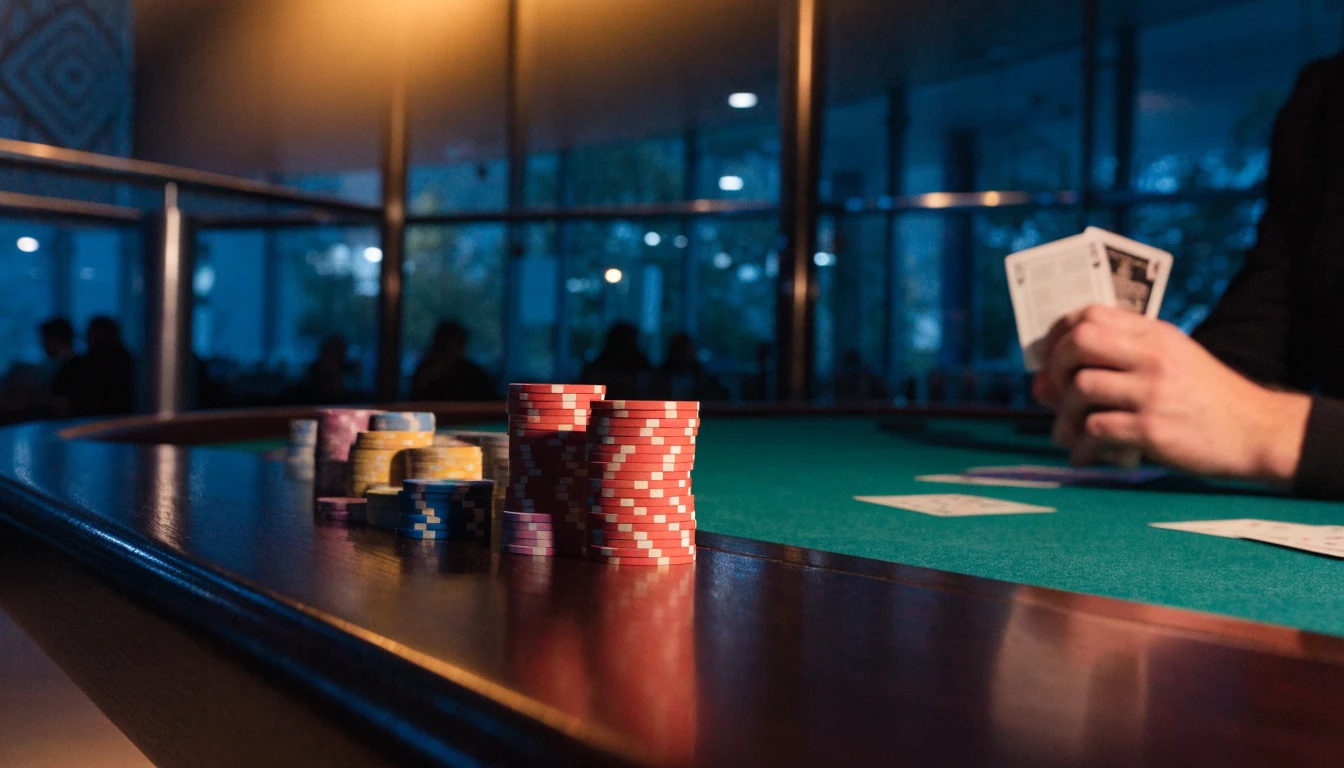
Card Counting at Live and Online Blackjack Tables
In New Zealand, mental card counting is not illegal. That legal position does not mean it is a reliable way to profit, or that it can be applied in the same way across every blackjack format. Counting involves keeping a mental estimate of cards already dealt and using that information to assess the cards that may remain. Its practical relevance depends on how cards are dealt and shuffled.
At a live-dealer table, actual cards are used, so cards seen during play may provide information about the remaining composition of the deck or decks. That possibility is not a guarantee of an advantage. A count can be difficult to maintain accurately while play continues, and the legal status of the technique says nothing about whether it will produce a favourable result.
Online casino blackjack requires a distinction between live dealing and RNG play. RNG blackjack uses software shuffles and permits faster rounds than a live table. In a software-shuffled game, the sequence of cards is generated and reshuffled by the system rather than exposed as a continuing physical shoe. A mental count of earlier cards therefore cannot be treated as a dependable guide to later hands. Faster play does not make counting more effective; it may simply mean that decisions occur more quickly.
Live online blackjack retains physical dealing, but counting should still not be regarded as a guaranteed method. The presence of cards on screen does not by itself establish that a count can be maintained accurately or that it will change the outcome of a session. Nor should a betting progression be mistaken for evidence that counting works.
The distinction is therefore both legal and practical: mental card counting is lawful in New Zealand, while its usefulness depends on the game’s dealing and shuffle method. In RNG blackjack, software shuffles undermine the basis for carrying a count forward. In live play, counting remains an uncertain technique, not a promise of winnings.
Is card counting illegal?
No. Using mental calculation to count cards is not illegal under New Zealand law.
Does blackjack always pay 3:2?
No. A natural blackjack often pays 3:2, but some tables pay 6:5. Check the table’s displayed rules before playing.
Is insurance a good bet?
No; insurance should not be treated as a recommended bet. It is an optional wager separate from the main hand.
Created by the ”Casino Slots Adviser NZ” editorial team.