Free Pokies in New Zealand: Online Play Explained
 Available in US
Explore game formats, licensing distinctions, bonuses, volatility and why free-play results cannot promise real-money outcomes.

Table of Contents
- Playing Free Pokies Online in New Zealand
- Pokies Without a Download: Game Formats and What They Offer
- What Free Play Can—and Cannot—Show About a Pokie
- The Online Casino Licensing Changes Expected From 2026
- Free Pokies on Mobile: What the Evidence Establishes
- Bonus Features, Bonus Buys, and Promotional Funds
- No-Deposit Offers: Conditions That Need Checking
- Free Play and Real-Money Pokies Are Not the Same
- Volatility, Progressive Jackpots, and Pokie Game Design
- RTP in Free Pokies: A Long-Run Measure, Not a Session Promise
Playing Free Pokies Online in New Zealand
The legal distinction in New Zealand is between operating an online casino from within the country and an individual choosing to play on a site based overseas. Under the Gambling Act 2003, an online casino cannot be operated from within New Zealand. That restriction concerns the location and activity of the operator; it does not make it a criminal offence for a New Zealander to visit an offshore casino or play its games.
This distinction matters when considering free pokies online in NZ. The phrase may describe games played without staking money, but it does not by itself identify where a casino is based or what rules apply to its operator. A free-play option on an offshore site remains part of a service provided from outside New Zealand. Conversely, the fact that a game can be accessed online does not mean an operator is established in New Zealand.
New Zealand residents may legally play at internationally licensed sites. The player’s legal position should not be confused with the operator’s. The prohibition on domestic online casino operations is not a general ban on residents accessing overseas platforms, and playing at one is not, by itself, a criminal offence for an individual. Describing the activity as permitted for a player does not establish that an offshore operator is licensed or supervised by New Zealand authorities.
For free pokies in New Zealand in 2026, this list offers a starting point for checking which operators may be worth exploring. Use the details shown for each entry as a guide, and verify the available games and terms directly with the operator.
License: Malta Gaming Authority, licence no. MGA/B2C/394/2017 N1 Casino is listed with a Malta Gaming Authority licence, number MGA/B2C/394/2017.
License: Tobique Gaming Commission, licence no. 0000002 Ricky Casino is listed with a Tobique Gaming Commission licence, number 0000002.
Payout speed: 1-3 business days Wintino’s stated payout speed is 1–3 business days.
License: Malta Gaming Authority, licence no. MGA/B2C/370/2017 Play Grand is listed with a Malta Gaming Authority licence, number MGA/B2C/370/2017.
License: Tobique Gaming Commission, licence no. 0000091 7Bit Casino is listed with a Tobique Gaming Commission licence, number 0000091.
License: Curaçao Gaming Authority, licence no. OGL/2024/165/0185 BitStarz is listed with a Curaçao Gaming Authority licence, number OGL/2024/165/0185.
License: 07017519840 · Payout speed: 1-3 business days Zotabet has the licence identifier 07017519840 listed, and a stated payout speed of 1–3 business days.
License: Tobique Gaming Commission, licence no. 0000064 Neospin is listed with a Tobique Gaming Commission licence, number 0000064.
Payout speed: 1-3 business days Lamabet’s stated payout speed is 1–3 business days.
That separation also helps clarify what “free” means in this context. It can refer to a game mode that does not require a wager, but the label alone says little about the site’s location, the service’s legal status, or any conditions attached to access. Searching for free online pokies, or for a way to play free pokies on line, does not change the underlying distinction between a domestic operator and a player using an overseas service.
The same point applies to references to free chips or money with no deposit. Those phrases describe possible promotional formats, not a separate category of New Zealand gambling law. A free-play game and an offer connected with an offshore casino may appear similar in casual descriptions, but the wording does not determine who operates the site or where the operator is based. Any terms attached to a particular offer would need to be considered separately; they cannot be inferred from the word “free”.
An offline game is different in one basic respect: it can be played without accessing a casino website at that time. That does not alter the legal rule about operating an online casino within New Zealand. Nor does it establish that every game described as offline is free, or that every online free-play option has the same conditions. The legal distinction here concerns the operator’s location and the player’s conduct, not the technical format of a game.

For readers comparing ways to play free pokies online in NZ, the clearest starting point is therefore to identify which party is being discussed. A New Zealand resident playing at an offshore platform is not committing a criminal offence merely by playing. A business running an online casino from within New Zealand would be a different case under the Gambling Act 2003. Treating those two activities as equivalent would misstate the law.
This is a limited legal distinction, not an endorsement of any particular site. “Internationally licensed” describes a site’s licensing outside New Zealand; it does not mean that the site holds a New Zealand licence. Equally, the legality of a resident’s decision to play should not be read as a guarantee about the quality of a service or the outcome of a dispute. The central point is narrower: New Zealand law prohibits domestic online casino operation, while it does not make an individual resident’s play at an offshore casino a criminal offence.
Pokies Without a Download: Game Formats and What They Offer
The phrase “without a download” describes how a game is accessed, not what kind of pokie it is. Game format is a separate question: classic and video pokies differ in their reel layouts and the features commonly associated with them. Knowing the format can help explain what a game contains, but it does not establish whether a particular title can be played in a browser or whether registration is required.
Three reels and no bonus rounds. They feature a simple reel structure where play centres on the symbols appearing across the reels.
Commonly use five reels and may include wilds, scatters, and free-spins rounds.
Classic pokies use three reels and do not have bonus rounds. Their defining feature is the comparatively simple reel structure: play centres on the symbols that appear across those reels, without a separate bonus round forming part of the game. “Classic” therefore identifies a format, rather than a statement about how the game is delivered or whether it is available for free play.
Video pokies commonly use five reels. They may include wilds and scatters, as well as free-spins rounds. These features distinguish the format from the three-reel classic type, although their presence does not mean that every video pokie has the same layout or set of features. The word “commonly” matters: it describes a typical format, not a requirement that applies to every title.
This distinction is useful when comparing game descriptions. A three-reel layout without bonus rounds fits the classic format described here. A five-reel game with wilds, scatters or free-spins rounds fits the common video-pokie pattern. These are broad categories, not a complete inventory of every possible design. A game’s individual information remains more specific than its category label.
The format alone also says little about the experience of a particular game. Two video pokies may share a five-reel structure while differing in their presentation and feature combinations; the category does not make them interchangeable. Likewise, identifying a game as classic indicates its basic structure but does not establish any other property of its play. The useful distinction is limited to the features the format describes.

For someone looking for free pokies online without installing a game, the format label should not be treated as evidence about access. “Classic” and “video” describe game structure; they do not confirm that a title runs without a download, can be played without registration, or is available in a free-play mode. Those details depend on the specific service and game, and cannot be inferred from the reel format alone. The same applies to wording about downloading a game: it does not identify whether the title is classic or video.
Separating these ideas avoids a common category mix-up. A free-play option concerns whether play uses real money; a download concerns the method of access; classic or video describes the game’s structure. One label does not settle the others. In particular, a search for free pokies with no download does not, by itself, identify which reel format is available or what features a title contains.
A concise comparison is therefore possible: classic pokies have three reels and no bonus rounds, while video pokies commonly have five reels and may include wilds, scatters and free-spins rounds. Beyond that distinction, claims about an individual game’s access method or availability require information about that specific title.
What Free Play Can—and Cannot—Show About a Pokie
Free play can show how a particular session unfolds, but it cannot establish what the next spin will do. Online pokies use random number generators (RNGs) to determine outcomes. Each spin is independent: earlier results do not alter the result of the next one. A run of wins, losses or mixed outcomes is therefore a record of that session, not evidence that the game is becoming more or less likely to pay.
Online pokies use random number generators (RNGs) to determine outcomes, meaning each spin is independent and earlier results do not alter the next one.
This matters when interpreting an entertaining or disappointing stretch of play. Several wins close together do not demonstrate that a further win is due, and a long sequence without a win does not make one more likely on the next spin. The same reasoning applies when free play produces an outcome that seems unusually generous or sparse. A short run can feel persuasive because its results are visible and immediate, but it remains a small sample of random outcomes.
Playing free pokies can still have a limited observational purpose. It can make the pace of a session and the sequence of results apparent without requiring conclusions about future spins. Someone playing for fun may find the experience sufficient on those terms: the outcomes provide entertainment in the moment, rather than a dependable pattern to follow. The distinction is between observing what happened and inferring what must happen next. The first is possible; the second is not supported by the random mechanism.
A session’s apparent pattern may also be shaped by ordinary features of chance. Results can cluster, alternate, or remain uneven for a period without contradicting independence between spins. Human attention tends to connect nearby events into a story: a win may seem to signal momentum, while repeated losses may seem to call for a correction. Neither impression changes the RNG’s operation. Treating a past result as a cue for the next one mistakes sequence for influence.
Free play also cannot establish that a game will behave identically in every setting or session. The available outcome data from one period do not, by themselves, reveal a stable personal expectation. Nor does a visible short-term return establish what the game is designed to return over the long run. These are different kinds of claims: a session records particular outcomes, while a long-run measure describes a statistical average across a much larger body of play. The average is not a promise about an individual session.
For that reason, a player who tries free play pokies should interpret the results narrowly. They can show which outcomes occurred during that play and how the experience felt. They cannot demonstrate that a win is imminent, that a loss is likely to reverse, or that a brief run predicts later results. The same limits apply whether the session is described as playing pokies free for fun or as a way to explore free pokies games. Random outcomes remain random; a change in the way a session is experienced does not turn its history into a forecast.
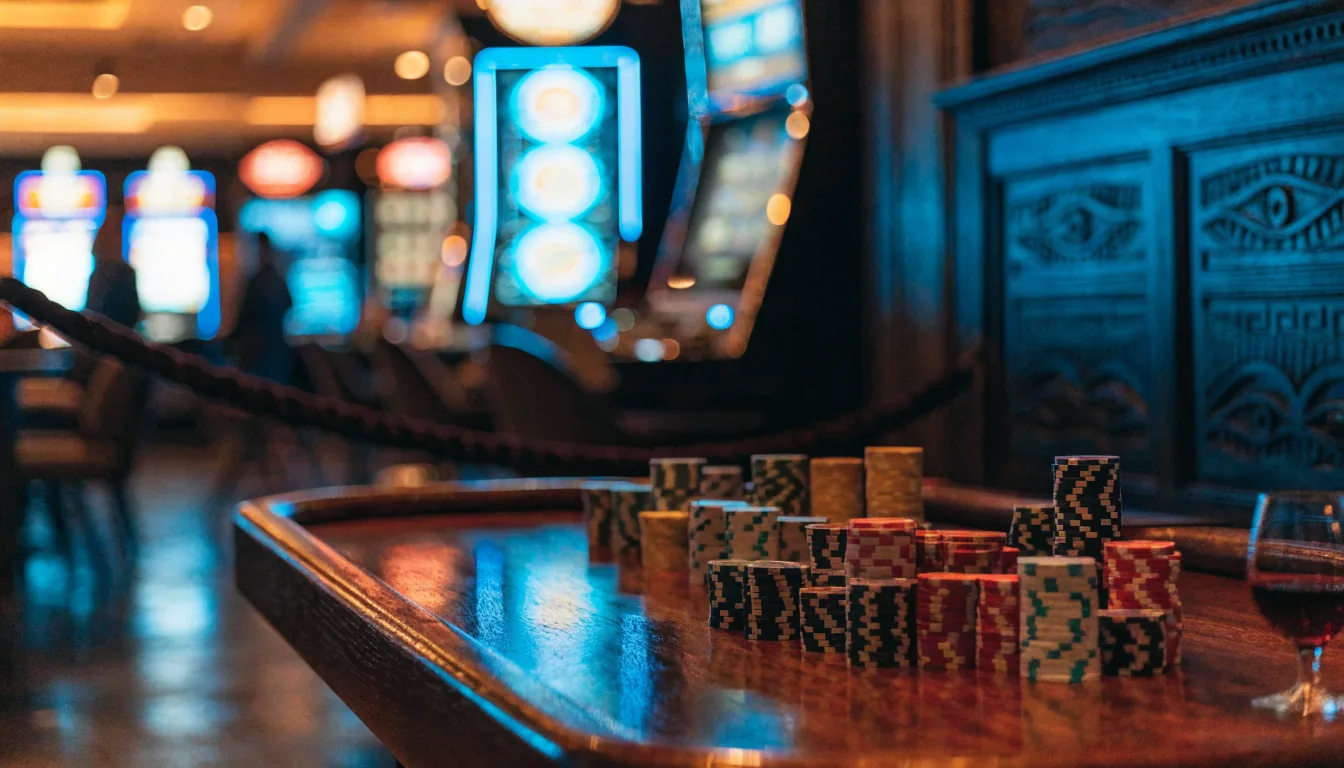
The practical value of free play, then, lies in the experience of a particular session, not in discovering a winning sequence. The RNG makes each spin independent of those before it, and a short record cannot overcome that independence. Any interpretation that treats recent results as instructions for the next spin goes beyond what the observed outcomes can show.
The Online Casino Licensing Changes Expected From 2026
The move towards licensing online casinos in New Zealand was initially described as a change expected to take effect from 2026. That expectation needs to be read alongside the later legislative timetable: the Online Casino Gambling Act 2026 came into force on 1 May 2026, but the full licensing regime is not expected to be operational until 2027. The year in the heading therefore marks the start of the legal transition, not the completion of the new system.
A specialist review of the earlier bill framework identified the Department of Internal Affairs (DIA) as the regulator and described an initial allocation of up to 15 licences. These were provisions of the proposed framework, rather than evidence that the full licensing system was already operating. The Act establishes New Zealand’s first domestic licensing regime for online casino gambling, while the Gambling Act 2003 continues to prohibit online casinos from being based in New Zealand.
The transition has its own defined limits. Online casinos that were already providing services to people in New Zealand before 1 May 2026 may continue to do so until 1 December 2026 under the transitional provisions. That permission does not amount to a completed licence, nor does it remove the distinction between services supplied from offshore and a casino operated within New Zealand. The law is expected to make unlicensed operation an offence from around mid-2027.
This distinction matters for anyone considering free pokies online. The new framework is intended to govern providers operating under New Zealand licences; it should not be read as establishing that every offshore site is locally licensed or supervised. Before the Act, offshore online casino gambling was not overseen by a New Zealand regulator, and customers had no domestic government body to turn to for disputes. New Zealand does not have a specific regulator for offshore online casinos.

The bill-era framework described by a specialist review also set out operator obligations covering harm minimisation, advertising restrictions, age verification and tax contributions. These requirements indicate that licensing is not simply a permission to offer online casino games. It brings conditions on how operators must conduct their business and address risks associated with gambling. The legislation’s existence, however, does not by itself confirm that a particular site holds a licence or has met those obligations.
For players, the practical change is therefore gradual. The Act has created a domestic legal framework, but the transitional period and the later expected start of full operation mean that the licensing landscape is not yet equivalent to a mature, fully functioning system. A site’s availability in New Zealand, or its presentation of free casino pokies, does not establish its status under the new regime. The relevant distinction is whether the operator is covered by the applicable transitional provisions or, once the system is operating, holds the required New Zealand licence.
Free Pokies on Mobile: What the Evidence Establishes
Free play and mobile access describe different aspects of an online pokie. “Free” refers to playing without staking money; “mobile” refers to using a phone or tablet. A game can meet one description without necessarily meeting the other. The terms therefore should not be treated as proof that every free pokie is available on every mobile device.
A mobile screen may be used to view a game, but the label alone does not establish how the game behaves on that screen. It does not confirm that controls are easy to operate, that text is legible, or that every feature works as it would on a larger display. Those are questions about a particular game and its implementation, not consequences of calling it free play. Nor does the word “mobile” establish that a game can be used without an internet connection or that it must be installed as an app.
The distinction matters when assessing claims about playing free pokies on a phone. A general statement that a platform offers free games does not, by itself, describe their mobile presentation. Likewise, a mobile-friendly site does not establish that each game has been adapted equally well. Compatibility and usability are separate matters: a game may open on a device while still offering an interface that is difficult to navigate.
Free play can still be understood as a mode of experiencing a game rather than a separate kind of outcome mechanism. Online pokies use random number generators, and previous spins do not determine the next one. Changing from a desktop display to a mobile device does not turn a previous result into a predictor of what follows. The device changes the way the game is accessed, not the independence of successive outcomes.
This also sets a limit on what can be inferred from a brief mobile session. A game appearing and accepting input on a phone demonstrates only that it can be accessed in that instance. It does not establish consistent performance across devices, screen sizes, or operating systems. A short session also cannot show that later outcomes will resemble earlier ones; each spin remains governed by the game’s random number generator.
Descriptions such as “play free pokies on mobile” are most precise when they refer to a specific game and the conditions under which it is presented. Without those details, the phrase expresses an intended use, rather than evidence of compatibility or a particular level of usability. Free play may suit casual exploration on a phone, but the device label alone cannot establish how well a particular game will work.
Bonus Features, Bonus Buys, and Promotional Funds
A bonus-buy feature changes how a bonus round is entered. Rather than waiting for the round to occur during ordinary play, a player pays a set multiple of the stake to access it directly. The feature therefore has an explicit cost: it is not a free bonus merely because it skips the wait for a trigger.
A specialist review reports that bonus buys can cost between 50 and 100 times the stake, with the price depending on the game. That range describes a substantial additional wager, not a guaranteed return or a measure of what the bonus round will pay. Paying to enter the feature gives access to the round; it does not establish its outcome.
This distinction matters when comparing free pokies with paid play. A free-play mode may allow a game to be explored without staking personal funds, but that does not mean a bonus-buy feature can be entered without cost in a real-money version. Nor does the presence of a bonus round show that a promotional balance can be used to buy entry. The purchase mechanism and the funding rules are separate questions.
Attention Bonus-buy games are usually excluded from wagering on promotional funds, so always check the specific terms of an offer.
Promotional funds commonly come with wagering conditions, and bonus-buy games are an important restriction to check. A specialist review reports that these games are usually excluded from wagering on promotional funds. This is a reported condition, not a rule that can be assumed to apply identically to every offer. The terms for a particular promotion determine whether a bonus-buy wager is permitted and whether it counts towards any wagering requirement.
The distinction also applies to searches for free bonus pokies or a free sign-up bonus. These phrases can refer to different things: a game played without a cash stake, a promotional credit, or a bonus-round feature within a game. They are not interchangeable. A promotional balance may have restrictions that do not apply to ordinary free play, while a bonus-buy option may require a separate stake multiplier. A title’s inclusion of a bonus round, by itself, does not establish that the round can be accessed free of charge.
Before treating a bonus buy as part of a free pokies offer, the relevant terms need to be read for both the funding source and the eligible game activity. The key points are whether the feature can be used with promotional funds and whether such a wager contributes to any wagering condition. Without those details, a headline referring to bonus pokies does not establish that a paid feature is available at no cost or that its use qualifies under a promotion.
No-Deposit Offers: Conditions That Need Checking
A no-deposit promotion and free demo play are different arrangements. A demo lets a person try a pokie without wagering promotional funds; a no-deposit offer, where available, is a promotional benefit governed by its own terms. The label alone does not explain how the benefit can be used or what conditions apply.
The same applies to sign-up bonuses. A headline may emphasise a cash value or free spins, but it does not establish the wagering requirements attached to the promotion. Those requirements need to be checked in the current terms before an offer is claimed. In particular, promotional funds can be subject to game-specific restrictions, so the list of eligible games matters as much as the headline description.
Bonus-buy rounds warrant separate attention. They allow entry to a bonus feature through a direct payment, rather than waiting for it to occur during ordinary play. A specialist review reports that these purchases can be priced at 50 to 100 times the stake and that bonus-buy games are generally excluded from wagering on promotional funds. This is a reported condition, not a rule that should be assumed to apply identically to every promotion. The applicable terms determine whether a particular game or feature counts.
That distinction can affect how a bonus is used. A game may be available in a casino’s catalogue while still being ineligible for promotional wagering, or a bonus-buy option may be treated differently from the game’s standard mode. Promotional wording should therefore be read alongside the full conditions, rather than taken as a complete account of the offer.
Free video pokies played in demo mode do not, by themselves, establish that a no-deposit bonus is available or that demo activity satisfies promotional conditions. Demo play and bonus wagering serve different purposes: one is a way to play without staking promotional funds, while the other is governed by the offer’s terms. Any claim that a particular free-play activity contributes towards a bonus would need support in those terms.
Careful comparison rests on the conditions actually attached to an offer: whether wagering applies, which games qualify, and how bonus-buy features are treated. Without checking those points, a promotional amount alone gives an incomplete picture.
Free Play and Real-Money Pokies Are Not the Same
Free play and real-money play can look similar on screen, but they involve different stakes. In a free-play mode, no personal money is wagered on each spin. It can provide entertainment and familiarity with a game, but any balance shown in that mode is not, by itself, money available to withdraw.
Real-money pokies involve wagering funds that have monetary value. A win may increase the balance available within the gambling account, subject to the applicable terms. The distinction is therefore not simply whether a game displays a win: it is whether money is being staked and whether the resulting balance has a route to withdrawal.
The phrase “free pokies for real money” can blur these categories. Free play does not mean that a player can make cash withdrawals from a practice balance. A no-cost promotion, where offered, is also different from a standard free-play mode; its conditions determine whether any resulting winnings can be withdrawn. The existence of a free version does not establish that the same game is available for real-money wagering, or that its settings are identical.
Age rules apply to online casino play regardless of whether the activity is described as casual or recreational. In New Zealand, the minimum age for online casino play is 18. Free access should not be treated as a way around that threshold: the relevant activity remains online casino play, even when no personal funds are staked.
Tax treatment is a separate question from whether a session uses free play or money. Recreational gambling winnings in New Zealand are generally not taxed. That general treatment does not make a practice-mode balance a taxable prize or convert it into withdrawable funds. Nor does it determine the terms attached to a particular promotion.
These distinctions matter when comparing free pokies with paid play. Free play can offer an opportunity to engage with a game without staking personal money, while real-money play carries financial stakes and may produce a withdrawable balance. The word “win” can describe an on-screen outcome in either setting, but its practical meaning differs: in free play, it may be only a game balance; in real-money play, it concerns funds wagered or won under the account’s applicable conditions.
Accordingly, free pokies in New Zealand are best understood as a form of recreational access, not as a promise of cash winnings. The age threshold applies to online casino play, and the general tax treatment of recreational gambling winnings does not erase the basic difference between a simulated balance and money that has been wagered.
Volatility, Progressive Jackpots, and Pokie Game Design
Volatility describes the pattern of a pokie’s payouts: how often wins occur and how large they tend to be. Low-volatility games pay smaller wins more frequently. High-volatility games produce wins less often, but those wins can be larger. The distinction concerns the distribution of outcomes, not a promise about what a particular session will deliver.
This matters when comparing free-play games. A run of frequent, modest wins may be consistent with a low-volatility design, while a game with longer stretches between wins may reflect higher volatility. Neither pattern, observed briefly, establishes how the game will behave over time. Volatility is a feature of the game’s design, not a reliable forecast for a short session.
Progressive jackpots use a different mechanism. Contributions from spins are pooled across casinos running the same game, building a shared jackpot. The prize is therefore linked to play across those participating casinos rather than solely to activity in one player’s session. A displayed jackpot can represent that pooled funding, but its presence does not by itself describe the frequency or size of ordinary base-game wins.
The jackpot contribution also affects the game’s base-game return. On a progressive jackpot pokie, part of each bet is directed to the jackpot, leaving a lower base-game RTP. This is a structural trade-off: some of the wager supports the pooled prize rather than the base game’s payouts. The jackpot and the base game should therefore be understood as related but distinct parts of the design.
For someone exploring free pokies, volatility and jackpot structure offer different ways to characterise a game. Volatility concerns the spacing and scale of wins; a progressive jackpot concerns how a prize is funded across casinos and how that funding relates to the base-game return. A free-play session may show the game’s interface and payout events, but it cannot establish the long-run pattern or predict when a progressive prize will be won. Those distinctions are more useful than treating a large jackpot display as evidence that a game pays more often or returns more through its base game.
RTP in Free Pokies: A Long-Run Measure, Not a Session Promise
Return to player, or RTP, describes the share of total stakes a pokie is designed to return across an extremely large number of spins. It is a theoretical measure, calculated through millions of simulated spins, rather than a prediction of what happens in a particular game session.

Online pokies commonly have stated RTPs between 94% and 97%. At the upper end, a 97% RTP means that, over the long term, the game is designed to return $97 for every $100 wagered. That figure describes an aggregate pattern across extensive play; it does not mean that a player will receive $97 back after wagering $100 in one sitting.
This distinction matters when considering pokies for free. A free-play session may be enjoyable, but its results do not establish whether the game’s stated RTP is accurate or indicate what a later session would return. RTP is not a short-term score, and a small sample of spins cannot reproduce the scale on which the percentage is calculated.
The figure also needs to correspond to the version being played. Some game studios release the same pokie with different RTP settings, and the operator selects which version to offer. Consequently, a percentage associated with one version may not describe another. The game’s information panel is the relevant place to check the RTP for the version in use, rather than relying on a figure found elsewhere.
For free slots and pokies played for entertainment, RTP is best understood as background information about a game’s long-run design. It can support comparison between stated versions, but it cannot promise a return, set expectations for a single session, or turn free-play results into a reliable forecast.
Are online pokies legal in New Zealand?
Yes, New Zealanders may play at offshore online casinos without committing a criminal offence. Operating an online casino from within New Zealand is illegal.
How do pokies work?
Online pokies use random number generators, so previous spins do not affect the next result. Their RTP is a long-run theoretical return, not a promise about an individual session.
Are the pokies fair?
Online pokies use random number generators, so each spin is independent of previous ones. That does not guarantee a particular result or establish that an offshore site is supervised by New Zealand authorities.
Are offshore pokies sites safe for NZ players?
Offshore sites are not overseen by a specific New Zealand regulator, so players lack a local consumer protection agency for disputes. An international licence is not a New Zealand licence.
Published by the Casino Slots Adviser NZ team.